



Project presentation
Chisec is a municipality of 100,000 inhabitants, most of whom live in 220 rural communities. It is located in a region that was severely affected—agriculturally, socially and environmentally—by the civil war of the 1980s. Today, the Indigenous Q’eqchi’ farming communities face significant economic hardship.
The extreme poverty experienced by local families further reinforces the marginalisation of women. Every day, they struggle with a lack of economic opportunities, limited access to education (75% of the population is illiterate), and inadequate healthcare. Their contribution to family and community life remains largely unrecognised.
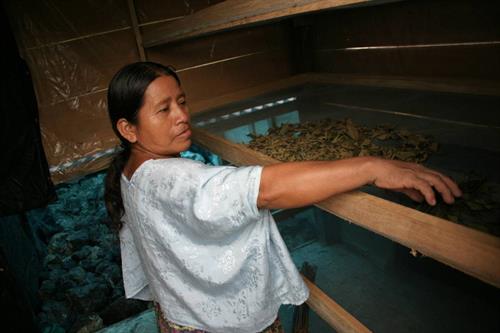
Health conditions in Chisec are particularly poor due to the humid tropical climate, the scarcity of healthcare facilities and the high cost of medicines. To address these challenges, AVSF built a laboratory in 2005 where women produce simple remedies based on traditional medicinal plants.
Since 2002, AVSF, in partnership with the local Indigenous NGO APROBA-SANK, has supported the district committee COMON Qana’ Tzuultaq’a, which brings together 350 women aged 16 to 60 from 20 rural communities. The production and processing of medicinal plants in the laboratory are carried out by eight volunteer members of the committee.
However, their work is limited by a lack of training to improve product quality, as well as by the long and costly daily journeys many women must make to reach the laboratory.
The project is built around three key components:
- improving women's working conditions;
- strengthening the production, processing and marketing of medicinal plants;
- reinforcing the committee’s organisational capacity.
To improve working conditions, a communal facility including a kitchen, latrines, showers and a dormitory adjoining the laboratory will be constructed. To strengthen production, committee members will be trained to cultivate medicinal plants on their own plots and sell them to the laboratory. Eight laboratory technicians will receive specialised training, while 20 community health promoters responsible for marketing medicinal products in their villages will complete a certified training programme. Lastly, the committee’s organisational capacity will be reinforced through the legal registration of the association and the acquisition of the required health certification.