



Project presentation
In Bluefields, the capital of the South Caribbean Coast Autonomous Region of Nicaragua, the population faces extreme poverty and particularly harsh living conditions. The most disadvantaged peripheral neighbourhoods lack basic infrastructure, preventing residents from accessing drinking water, electricity and a healthy, diversified diet throughout the year. Nicaragua is especially vulnerable to climate change. Conventional farming practices and deforestation have left soils sterile, hard and acidic, exacerbating the impacts of increasingly frequent extreme weather events.
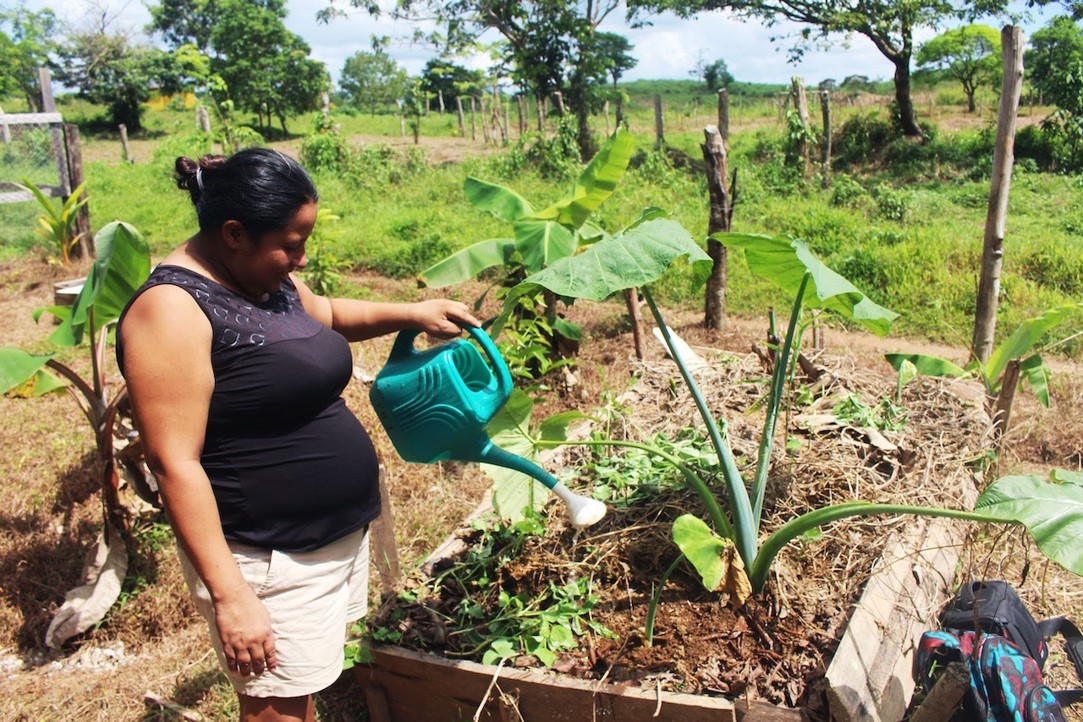
The most vulnerable women are among the first to be affected by these climate disruptions. In response, the organisation blueEnergy is implementing a food security strengthening programme to help families adapt to the consequences of climate change. Women in vulnerable situations—particularly women with disabilities and elderly women—are trained in agroecology and permaculture techniques to create their own family gardens. They then share and disseminate these practices within their communities.