



Project presentation
In Guinea-Bissau, women producing salt scrape the salt soil and filter it with water to obtain brine, which they boil over mangrove wood fires to harvest the salt. This method consumes large amounts of wood, driving massive deforestation, and poses health risks due to smoke inhalation. Three tons of wood are needed to produce one ton of salt.
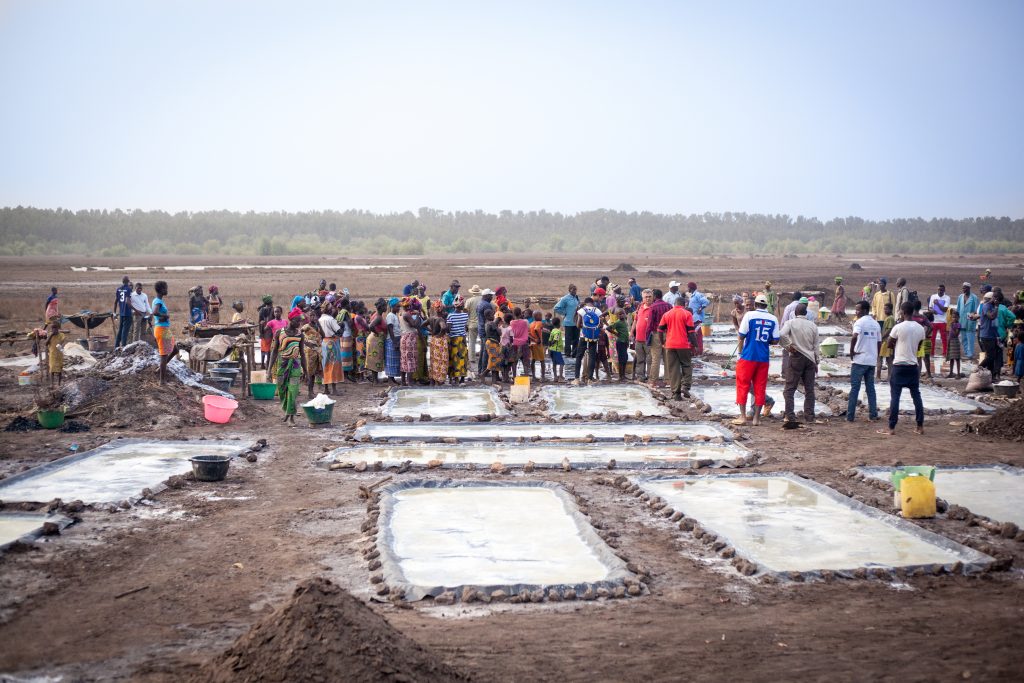
To address this, Univers-Sel has developed a more ecological production method in collaboration with local producers and salt marsh workers from Guérande: solar saliculture. Brine is poured onto plastic sheets, and evaporation through sun and wind leads to salt crystallization.
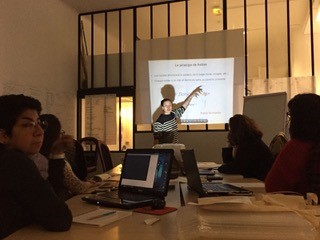
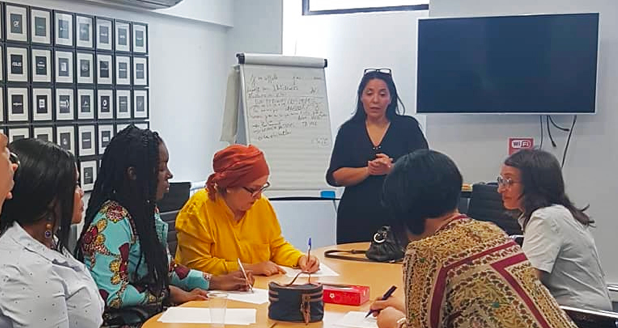
Since 2016, Univers-Sel has implemented this technique in the Oio region of Guinea-Bissau. In the first two three-year phases supported by the foundation, 48 lead women from 38 villages were trained in solar saliculture and passed their skills on to 1,500 women. This project received the Gender & Climate Solutions Award from WECF in 2019. During the 2023–2025 phase, Univers-Sel seeks to deepen support for salt producers.