
Women & Environment Program: The 12 new projects supported in 2026 have been announced!
This year, the RAJA-Danièle Marcovici Foundation is supporting twelve nonprofit projects that combine women’s empowerment with environmental protection. In partnership with the RAJA Group, the Women & Environment program is based on a solidarity-based mechanism implemented across 16 European companies within the RAJA Group. For every eco-friendly product purchased from a designated list, €1 is donated to the RAJA-Danièle Marcovici Foundation and then redistributed to the selected nonprofit organizations. The twelve projects recognized this year highlight the work of women who, around the world and every day, develop and share sustainable practices and solutions in response to climate and social challenges.
18 February 2026
DISCOVER THE 12 PROJECTS SUPPORTED IN 2026:
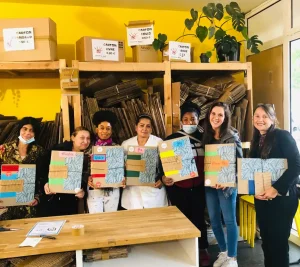
Carton Plein – Promoting the social and professional inclusion of highly vulnerable women through cardboard upcycling and cycle logistics (France)
The association Carton Plein supports women experiencing extreme precarity in accessing employment through the collection and upcycling of cardboard in Paris.
Over the past five years, women have represented 60% of those trained. The organization also introduces them to cargo bike professions and offers workshops on health, well-being, and self-confidence to foster their empowerment.
CCFD – Terre Solidaire – Agroecology and political leadership for women in the Chaco (Bolivia)
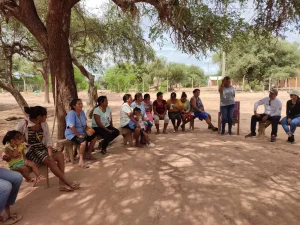
In Bolivia’s semi-arid Chaco region, Indigenous women manage land, families, and resistance to agro-industrial deforestation.
This project trains them in agroecology (agroforestry systems, market gardens) and political skills to defend their territory. Sixty-five women learn climate-adapted techniques over four months, while 80 others receive training to influence local decision-making through the GAIOC, strengthening both economic autonomy and environmental protection.
Commerce Équitable France – Sowing Equality, Harvesting Resilience (France)
Commerce Équitable France documents inequalities faced by women farmers in France (29% lower incomes, limited access to land) and trains 15 of them in leadership and governance.
The organization also raises awareness through studies, workshops at the 2026 Assises, and a dedicated award to highlight women’s role in the agroecological transition.
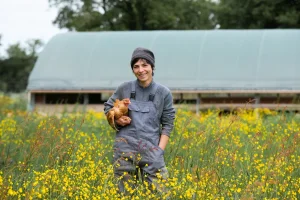
Elevages Sans Frontières – The Women’s Milky Way of Oubritenga (Burkina Faso)
Since 2015, Burkina Faso has faced a security crisis affecting border regions with Niger and Mali, leading to population displacement toward the Central Plateau near Ouagadougou.
There, Elevages Sans Frontières supports 75 women displaced by the crisis in entering the dairy sector through mentorship with 25 experienced breeders. They join the VOLAFO cooperative to process and sell milk, yogurt, and cheese locally, while adopting agroecological practices in response to climate challenges.
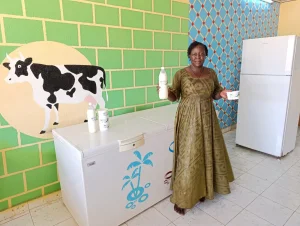
Entrepreneurs du Monde – FANSOTO: Microcredit and agroecology for rural women (Senegal)
Casamance, a region of Senegal, is particularly exposed to climate change, facing droughts, floods, and rice field salinization.
Entrepreneurs du Monde and its partner Fansoto train vulnerable women farmers in more resilient agricultural practices (compost, biopesticides) through accessible and hands-on farmer field schools.
Beneficiaries also access microcredit to purchase tools and climate-resilient seeds, increasing income and strengthening their autonomy in the face of climate challenges.
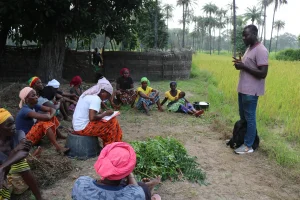
ICD Afrique – Sustainable shellfish farming and diversification for women in the Saloum Delta (Senegal)
Facing shellfish depletion and mangrove degradation, ICD Afrique trains women from Economic Interest Groups in sustainable shellfish farming, oyster cultivation, and beekeeping, while also developing market gardening and fish farming activities.
Equipment support, reforestation initiatives, and commercialization assistance (markets, e-commerce) strengthen both their economic and environmental autonomy.
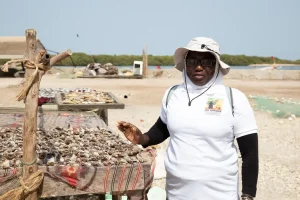
IMECE – Back to Home: Solar engineering program for Syrian refugee women (Turkey)
In Izmir, Turkey, IMECE trains Syrian women preparing to return to Syria in the installation and maintenance of solar panels through intensive six-week practical sessions.
They also gain entrepreneurial skills to generate sustainable income and contribute to the environmental reconstruction of their communities.
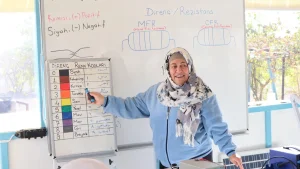
Inti Energies Solidaires – Low-tech and local production for women’s economic empowerment in the Atacora department (Benin)
Atacora, a rural department in Benin, faces high poverty and vulnerability. Agricultural activities are primarily led by women who process fruits and vegetables into marketable products (cassava flour, maize flour, dried mango, soybean processing, etc.).
IES trains 250 women from 10 groups to optimize their processing activities using mechanical tools and business management skills. It also deploys improved biofuel cookstoves to 800 women to reduce deforestation and firewood collection, improve health, and generate sustainable income.
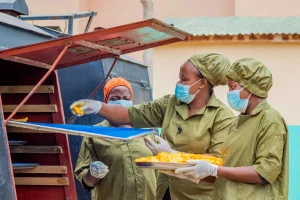
La Voûte Nubienne – Integrating women construction entrepreneurs into the low-carbon Nubian Vault eco-construction sector (Ghana)
In Tamale, Ghana, La Voûte Nubienne and its partner WEE North train 24 women in sustainable low-carbon construction.
They participate in 12 awareness sessions and paid practical building sites, becoming masons or site supervisors to construct three climate-adapted buildings.
This project helps break stereotypes and promotes decent employment in the face of poverty and climate migration.
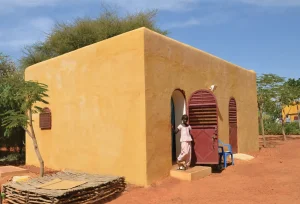
Le Chemin des Fleurs – Laundromat & Carport (France)
Located in Avrainville, Essonne, Le Chemin des Fleurs has developed since 2014 a social and professional integration project centered on organic market gardening and horticulture.
It supports 70% vulnerable women toward employment through organic production and sustainable infrastructure.
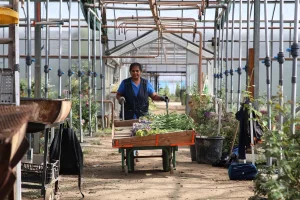
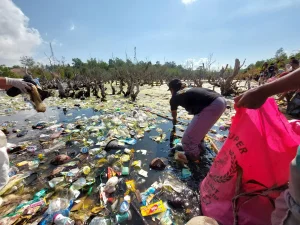
Naturevolution – Women Refuse Plastic: Marine plastic waste collection and upcycling by women in Kendari (Indonesia)
In Kendari, Indonesia, 300 tons of plastic waste are produced daily, with women particularly impacted by plastic pollution.
Naturevolution trains women to sort and collect plastic waste at sea using dedicated boats. The waste is then sold to the association’s recycling workshop. The women organize themselves into a cooperative and raise awareness in villages and schools to reduce pollution.
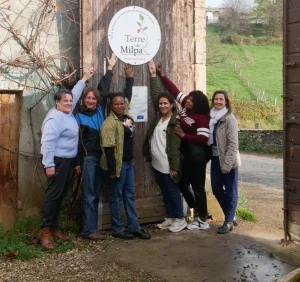
Terre de Milpa – Women & Farms (France)
Near Lyon, Terre de Milpa is creating a 100% women-led social farm combining market gardening, baking, and cooking. Women are housed and employed (minimum wage for two years), with equipment provided free of charge.
They are also supported by ADEAR to develop their activities toward full autonomy.
This project helps combat precarity and farm closures through participatory governance.
By supporting these 12 projects, the RAJA-Danièle Marcovici Foundation reaffirms its commitment to gender equality and environmental protection.
Discover the winners of the Women & Environment program for 2025.