
Mathilde Rivoire: Mobilizing Philanthropy to Protect Democracy in France
28 October 2026
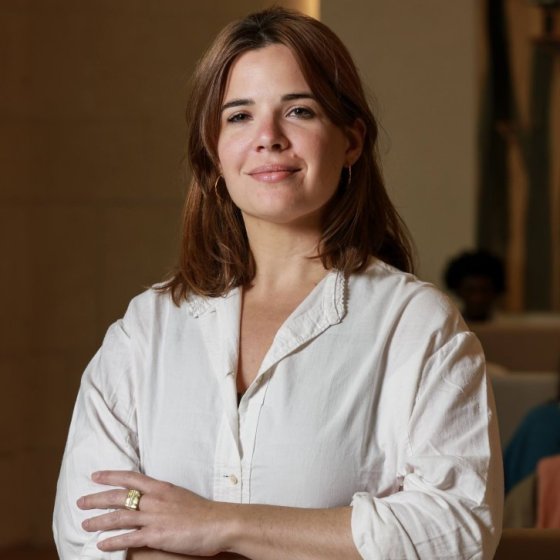
Mathilde Rivoire is Co-Executive Director of the Fonds pour la Démocratie (Democracy Fund), alongside Samia Hathroubi. After studying literature and political science, she has spent more than ten years working in philanthropy for public-interest organizations in France and the United States. Previously, she was Head of Development at the Open Democracy association (Démocratie Ouverte), where she was notably responsible for advocating for greater philanthropic engagement in democratic innovation.
You are the Co-Executive Director of the Fonds pour la Démocratie, France’s first participatory endowment fund dedicated to democracy. Could you introduce the Fund and explain the circumstances that led to its creation?
The Fonds pour la Démocratie is a brand-new organisation, officially established in 2025, dedicated to supporting public-interest associations that play a crucial role in defending and protecting democracy in France. Specifically, this means associations working to protect rights, ensure access to reliable, independent and verified information, and strengthen people’s ability to take action and promote political equality for all. This includes, in particular, people who are deprived of their rights, discriminated-against groups and the most vulnerable members of society, as well as their ability to participate in public life.
The Fund responds to a clear warning from civil society: democracies around the world are facing growing pressure. The V-Dem Institute even refers to a “third wave of autocratisation”, in which democracies are losing ground to autocracies worldwide. We are witnessing a shrinking of civic space, meaning a reduction in people’s ability to participate in public life, demonstrate, express themselves and access independent information. We are also seeing challenges to judicial independence, legal proceedings designed to directly undermine the work of associations and their freedom to engage in the political sphere, as well as attacks on press freedom and media concentration that threaten pluralism and citizens’ ability to form their own opinions freely.
In response to this situation, two pressing needs have emerged. On the one hand, associations working in this field in France need additional resources, trust and independence to carry out their work. On the other, philanthropists, foundations and individual citizens who want to take concrete action on these issues are asking themselves which associations to support, within what framework, through what selection process, and how they can act collectively. There was a growing need for a clearer understanding of the challenges and for philanthropic approaches commensurate with the scale of the problem. That is precisely why the Fund was created: to meet these needs and provide a platform for collective engagement.
The Fonds pour la Démocratie aims to mobilise funding to support civil society organisations working to protect democracy in France. What kinds of initiatives do you support, and what criteria guide your decisions?
We support associations that operate in the public interest as defined under French tax law: they must be non-profit organisations and must not serve a restricted circle of beneficiaries. Last year, we supported our first thirteen associations, with the aim of bringing together an initial cohort of partners representative of the broad democratic ecosystem.
In the area of access to reliable and verified information, for example, we supported the Conseil de déontologie journalistique et de médiation (CDJM), the only independent body in France bringing together journalists, media organisations and news agencies. It can receive complaints and organise mediation concerning the handling of information considered inconsistent with journalistic ethical standards. We collectively regarded this organisation as particularly important in the current climate.
In the field of rights protection, we supported the Maison des lanceurs d’alerte, which provides legal assistance to people who report wrongdoing affecting the public interest within their companies or in the public sector, and who need a protective framework in order to blow the whistle.
We have also supported citizen-led groups operating on a much more local scale, but whose work is equally essential. These include Aujourd’hui les citoyennes, on Réunion Island, which works to increase young women’s participation in public life, and Cho3 (Collectif des Habitants Organisés du 3e arrondissement), which operates in one of France’s poorest neighbourhoods, in Marseille. Its work includes a campaign for accessible and free public transport for people with reduced mobility. More broadly, these groups defend residents’ rights by addressing their most immediate needs. This is democracy at its most grassroots level: the foundation that safeguards people’s dignity and their ability to defend their rights.
We are about to announce our new cohort of supported associations, selected through a call for initiatives focused on protecting the rule of law and civic space. It brings together twelve associations that defend rights through legal action, protect civil society activists and document violations of fundamental freedoms. With elections approaching, and at a time when a vibrant public debate, independent checks and balances, and the protection of civic freedoms are essential, we felt it was important to support organisations working nationally to defend these fundamental pillars—the very foundations of democracy.
At a time when democracy is becoming increasingly fragile, can foundations become a genuine pillar of democratic resilience? What role do you believe they can play?
I believe we have moved beyond a moment of warning: we are now experiencing active erosion. This makes it essential for private actors with financial resources, the ability to take risks, the flexibility to respond appropriately and expertise in the public-interest sector to step forward. This is a particularly important moment for them to mobilise the resources needed to support associations that require independence in order to operate effectively.
Independence and trust are essential. As democratic erosion accelerates, there is a need for solidarity with those who are most directly exposed to attacks.
Civil society organisations that act as checks and balances can themselves become direct targets. Foundations can play a role in supporting them.
Today, fewer than 2% of French foundations identify democracy, justice and pluralism as their primary area of focus. That is far too little given the scale of the challenges. This frequently cited figure comes from a study conducted by the Fondation de France’s Philanthropy Observatory, based on data from 2023. Updated figures may differ somewhat, but the gap between current philanthropic priorities and the scale of the challenges remains enormous. There is therefore an urgent need for a renewed philanthropic commitment and a greater capacity to provide meaningful support to the associations on the front lines of these issues.
The Fonds pour la Démocratie will publish a briefing in the coming weeks, in partnership with the Fondation RAJA-Danièle Marcovici, examining the links between democracy and women’s rights. Why is it essential to recognise women’s rights as a democratic issue?
This is absolutely essential. Democracy and the rights of women and gender minorities are deeply intertwined and mutually constitutive.
Women’s rights cannot be protected without democracy, freedom of information, judicial independence, the protection of rights and the freedom for women to demonstrate, take to the streets and defend their rights.
Conversely, any weakening of women’s rights is itself an attack on democracy.
We are currently witnessing a decline in women’s political representation, reversing a trend that had previously led to stronger gender parity in institutions. This decline has been documented by the Haut Conseil à l’Égalité entre les femmes et les hommes (France’s High Council for Gender Equality). Women journalists are subjected to targeted and disproportionate attacks, feminist activists face online harassment, and reproductive rights are under attack—threatening women’s bodily autonomy. Democratic erosion is therefore consistently accompanied by attacks on the rights of women and gender minorities.
The Fondation RAJA-Danièle Marcovici has itself helped establish this diagnosis through the report La Nouvelle vague, published by Neil Datta, Executive Director of the European Parliamentary Forum for Sexual & Reproductive Rights. We know that France is now one of the countries most targeted by anti-rights and anti-democratic movements, ranking second only to Hungary. These movements are highly organised. Attacks on women’s rights serve as an initial entry point for broader assaults on the rule of law, judicial independence, pluralism and the ability of all voices to be heard.
Social media plays a central role in this dynamic. As part of our current work on gender and democracy, we are paying particular attention to masculinism—ideologies centred on male dominance and opposition to gender equality—and to the way these ideas spread narratives hostile to women’s rights. Such narratives can become genuine drivers of democratic destabilisation because of their impact on how political opinion is shaped.
With the next elections in France approaching, our institutions are taking this threat very seriously. A recent Senate report on masculinist threats even identifies issues relating to domestic security. These movements will have a significant impact on our democratic life, both in the short and long term. Understanding this phenomenon also means recognising that feminist foundations have been pioneers in addressing contemporary democratic challenges.
Given the vulnerabilities you see today, which mechanisms should be strengthened as a priority to consolidate our democracy?
We have clearly identified legal action and legal protection as key levers, which is why they are among our priorities. We can also draw lessons from countries that have experienced illiberal political developments, such as Hungary and, more recently, the United States. Strategic litigation—where associations bring landmark cases before the courts and secure victories that establish precedents and create a more protective legal framework—is fundamental. So too are digital and physical protection for human rights defenders and measures to prevent burnout.
A second lever is the power of citizens to organise. This issue has come up repeatedly in the strategic discussions we have held with our stakeholders, including associations, members of our governance bodies and philanthropic donors. The question is how to support highly local initiatives that are often less visible to philanthropy, but are driven by citizens who organise and mobilise collectively.
Finally, there is the need for alliances and cooperation. The attacks are numerous and highly organised, so the question is how we can strengthen our collective capacity to act. This is also one of the Fund’s ambitions: to contribute to a wider ecosystem of organisations and initiatives by building connections with broader movements. One example is the Coalition pour une Philanthropie Féministe (Coalition for Feminist Philanthropy), which we have decided to join.
It is now urgent for philanthropic donors to mobilise and commit greater financial resources.
We have significant opportunities ahead of us to work alongside associations and help build the democracy we want to see: today, for future generations, and for everyone.
Interview conducted by Cristina Asensi-Rodriguez, Communications Assistant Apprentice at the RAJA-Danièle Marcovici Foundation.