
Interview with Isabelle Rome: A Commitment to Defending Fundamental Rights, Women’s Rights, and Recognizing Gender Apartheid
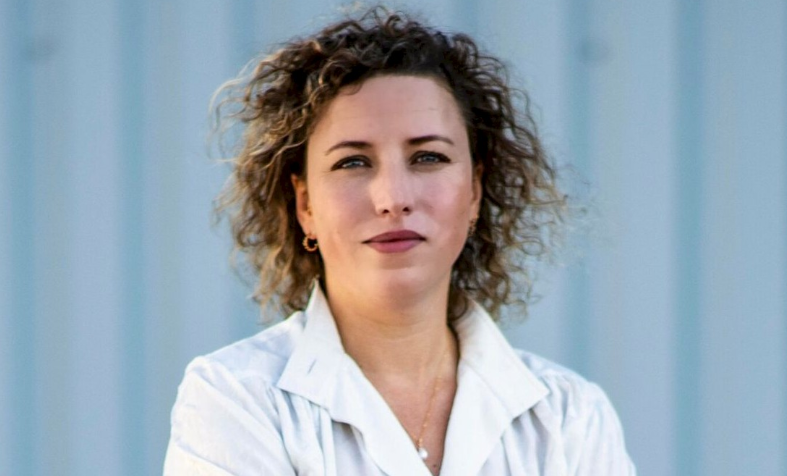
A senior magistrate and former Minister Delegate for Gender Equality, Isabelle Lonvis‑Rome now serves as France’s Ambassador for Human Rights and for the International Memory of the Holocaust. With a career that includes presiding over criminal courts, holding strategic responsibilities within the Ministry of Justice, and coordinating the 2019 national forum on domestic violence, she stands as one of the most knowledgeable and committed voices on equality, victim protection, and the fight against impunity. Her institutional work has always been accompanied by sustained involvement in civil society and a recognized body of written work, all driven by the same ambition: advancing fundamental rights and strengthening justice at the heart of society. In this interview, she reflects on today’s challenges, the progress still needed, and the meaning of her commitment.
19 February 2026
Can you present your role as France’s Ambassador for Human Rights?
My role unfolds along several axes. The first is to represent France in all international forums where human rights are debated: at the UN in New York and Geneva, before the Human Rights Council, and also at summits not directly under the UN. This diplomatic presence is essential, as it allows us to convey France’s conception of human rights—a conception deeply rooted in the idea that these fundamental rights belong to every human being.
I like to point out that the English expression human rights has greatly influenced contemporary usage, particularly the growing use of the term droits humains in French. Yet the translation is imperfect; it can give the impression of a collective set of rights. In reality, many rights are primarily individual rights.
That is why I sometimes use droits humains in everyday language, while considering that the most accurate expression might be droits de la personne humaine (rights of the human person). As for droits de l’Homme (rights of Man), the term has taken on a gendered nuance that was not present at the time of the adoption of the Universal Declaration of Human Rights in 1948.
We must take this into account, although the universality of rights remains.
Beyond representation, I also conduct bilateral missions. I have recently returned from Ukraine, Kazakhstan, and Japan. Each trip is an opportunity to represent France but also to dialogue with local authorities and civil society to advance fundamental rights.
Another aspect of my work is leading the French delegation during UN accountability exercises.
We must report concretely on how France meets its international commitments. No country is exemplary—and France is not entirely—but transparency is an integral part of democratic guarantees.
I ensure these exercises are thoroughly prepared with all relevant ministries. When I attended the Human Rights Committee or the Committee Against Torture, we sometimes had up to forty representatives from various central administrations. This collective approach is fundamental.
Finally, I am responsible for the French delegation to the International Holocaust Remembrance Alliance (IHRA). This work is crucial for preserving memory, fighting denialism, and strengthening education. I will travel to Jerusalem in December to present France’s candidacy for the Alliance presidency in 2027.
Alongside this, I conduct bilateral dialogues against antisemitism with several countries, including the United States, Germany, and Israel. The past few months have been complicated, but maintaining these partnerships is essential.
What are the priority projects you are currently leading?
One major project I am working on is organizing the next World Congress for the Abolition of the Death Penalty, which France will host from June 30 to July 3, 2026. I was recently in Japan for a preparatory regional congress. This global congress is an opportunity not only to bring together states committed to abolishing the death penalty but also to encourage other countries to take steps toward abolition.
For example, some countries have not abolished the death penalty but have not carried out executions for years. Our role is to encourage them to transform this de facto moratorium into legal abolition. For states that continue executions, the goal is at least to obtain a moratorium. We work with a group of “friend” abolitionist states to take coordinated actions and hope for progress by 2026.
Another important project is the creation of a House of Human Rights, initiated by the President of France. We are working with numerous partners—public institutions, bar associations, lawyers, NGOs—to design a useful, financially sustainable space that truly meets the needs of human rights actors and strengthens support for defenders. Several scenarios will be presented to the President in the coming months.
I also lead the Marianne Initiative, which hosts about fifteen human rights defenders from around the world in Paris each year for four months. They receive training, personalized support, material assistance, and meet European actors in Brussels and Strasbourg. I greatly value this initiative because it concretely strengthens the capacities of those who, sometimes at great personal risk, defend fundamental rights.
Finally, I contribute to the deployment of French feminist diplomacy. Although a dedicated mission exists at the Ministry, I frequently engage on these issues because of my own background and because women’s rights are, of course, an essential part of human rights.
On my trips, I often speak on violence against women, sexual and reproductive rights, and the protection of women’s rights defenders.
You have just returned from Ukraine. What are the most urgent issues on the ground?
Ukraine is one of my priorities. In recent months, I have focused on two main issues: conflict-related sexual violence and the dramatic situation of children.
Regarding sexual violence, I joined an international coalition supporting survivors. It should be noted that men have also been victims, particularly in the context of torture. The approach we support offers assistance—psychological, medical, and social—even in the absence of judicial proceedings. Not all crimes will be prosecuted; some will be tried by Ukrainian courts, others before the International Criminal Court. But support must begin now.
Regarding children, the situation is dire. It is estimated that 10,000 to 20,000 children have been deported or abducted, but fewer than 2,000 have been reunited with their families. The Bring Kids Back Foundation, launched by Ukraine’s First Lady, works to locate, repatriate, and assist these children. France supported the opening of a reception center, with three more planned. I am now also working to mobilize private funding to strengthen these efforts.
In occupied territories, a policy of forced “passportization” is being implemented, meaning that families must accept a Russian passport to access hospitals or schools.
Children are exposed to constant propaganda, sometimes abducted under the guise of extracurricular activities, and can disappear without a trace. This is an issue of utmost gravity.
You are also working intensively on the situation of women in Afghanistan. How would you describe their current situation?
The situation in Afghanistan is arguably one of the worst violations of women’s rights in the world.
Since the Taliban came to power, 121 decrees and laws have been adopted to restrict women’s rights, ranging from banning girls from school or from holding many jobs, to prohibiting women from appearing in public, singing, or working in NGOs.
This is a systematic erasure.
International jurisdictions have classified this as persecution based on gender, which has helped protect Afghan women in asylum procedures. But this is insufficient to capture the full scale of the system. That is why I advocate for introducing a new category in international law: gender apartheid.
The term is strong, but it precisely describes the situation—that is, an organized system of gender-based segregation that deprives a portion of the population of fundamental rights. Just as the term “genocide” was coined after World War II, this is about naming a crime that has not yet been legally recognized.
What would this recognition concretely achieve?
First, it would allow for a legal classification of a criminal system that goes beyond mere persecution. Second, it could lead to convictions, including by the International Criminal Court. The procedures are long, but the message would be clear:
The international community considers a system of gender apartheid to be a crime against humanity.
This is a powerful lever. And, as with the term “feminicide,” which entered public discourse before gradually being recognized by institutions, it sometimes takes time for societies to adopt a word. But once the word exists, it transforms the way people perceive the facts.
Interview conducted by Cristina ASENSI-RODRIGUEZ – Communication Apprentice at the RAJA-Danièle Marcovici Foundation.