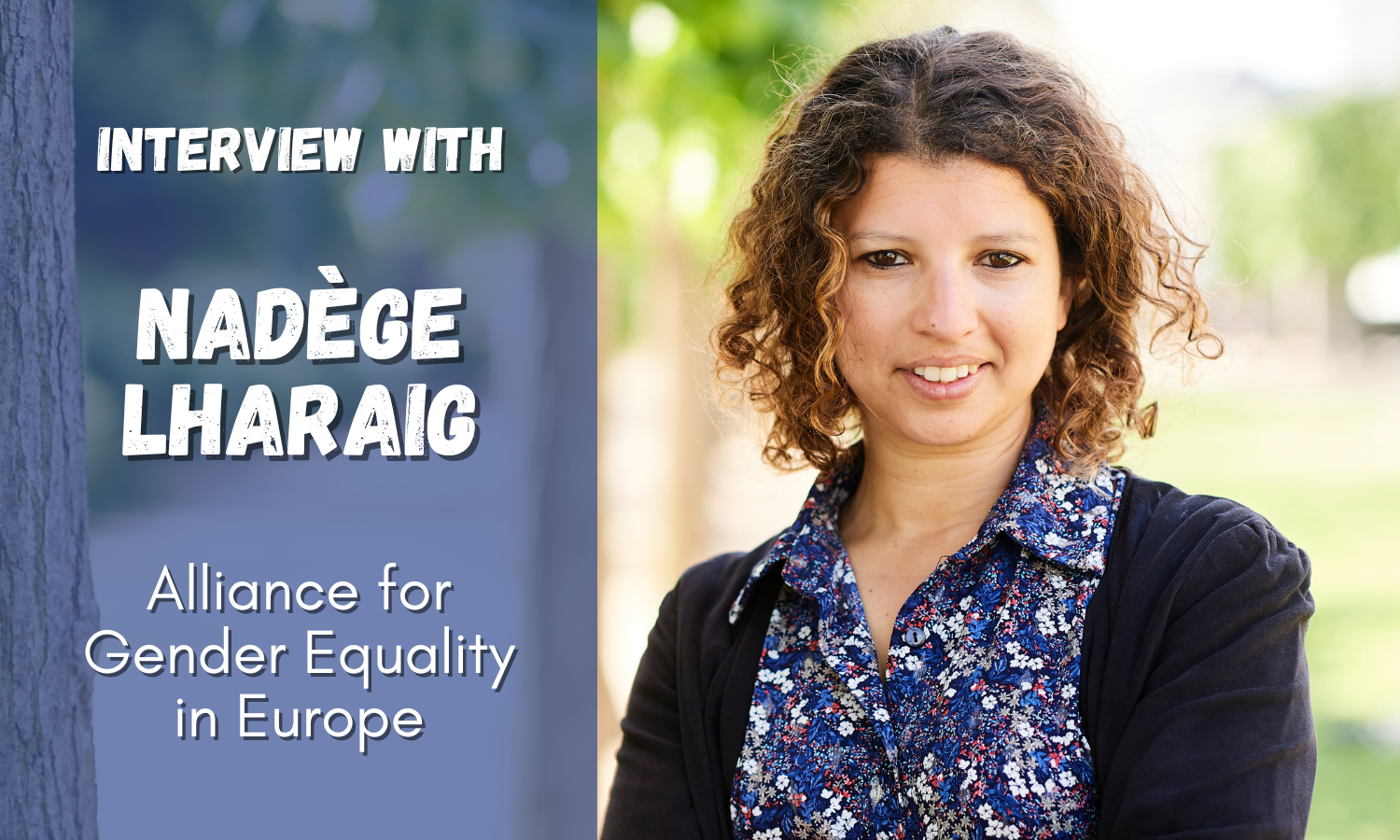

Female genital mutilation (FGM) still affects thousands of women and girls in Europe today and constitutes a serious violation of human rights. In Belgium, how does this reality manifest itself concretely, and what do women find when they walk through the doors of GAMS to be informed, protected, and supported, with respect for their history, their language, and their needs? In Belgium, an estimated 23,000 girls and women living in the country have undergone female genital mutilation (FGM), and around 12,000 girls are considered at risk of being cut if no preventive action is taken.Belgium has had a law criminalizing female genital mutilation since 2001. Although there have not been any trials in Belgium as there have been in France, the law is primarily used as a prevention tool. We tell parents:
There is a law in Belgium that protects children from FGM, and you can use this law to discourage family members who support continuing this practice.
At GAMS Belgium, we carry out preventive work to avoid FGM during trips back to the country of origin, especially during holidays. We work with the families concerned — women as well as men and young people. We also provide support for girls and women who have already undergone FGM. We are fortunate to have a multidisciplinary team: intercultural workers, social workers, psychologists, midwives, legal advisors, and more. One of GAMS’ strengths is being able to support people in their own language. Within our team of 25 people, there are 17 different nationalities.
I myself benefited from this tailored support at GAMS. I first took part in activities as an applicant for international protection, then completed training as a volunteer community outreach worker. I later joined the board of directors and have been President of the association since 2022.
The project supported by the RAJA-Danièle Marcovici Foundation strengthens psychological support for women who are survivors of FGM, through individual follow-up as well as support groups and therapeutic workshops. Why is this combined individual and collective approach essential in a recovery process, enabling women to regain self-confidence, break isolation, and reclaim their agency? What concrete effects do you observe among the women you support?
It is valuable, within the same organization, to be able to offer diverse care options in order to best meet the needs of those concerned.
Collective support, when it exists, carries great value. This type of activity is particularly well known and appreciated by women, as it meets a frequently expressed need: to gather with other women who have experienced similar life journeys or histories. While these experiences may share similarities, they always remain unique. Yet simply coming together allows women to realize they are not alone in facing certain difficulties — that others have encountered comparable situations, and that their experiences can inspire, inform, or reassure.
The strength of the collective lies in mutual learning. Participants highlight their personal experience not merely as testimony, but as lived expertise, which they share in order to transmit knowledge, offer support, and empower others. In this setting, a sense of sisterhood and belonging sometimes develops.
Even when stories come from very different countries or contexts, common threads emerge: universal experiences linked to the condition of women worldwide. The group then becomes a true laboratory for awareness and collective empowerment.
Individual support, for its part, offers a different, more intimate space. Some women prefer this format, choosing not to participate in group settings to avoid being confronted with painful memories or possible judgments rooted in familiar contexts. In this confidential environment, they can freely address what they may prefer not to share in a group; it is a protected space for expression, where personal trust and discretion prevail. We observe that even if many say they are not accustomed to speaking about themselves, individual sessions are essential so that there are witnesses to what they have lived through — people who can listen to their different journeys without interruption and with kindness.
Ultimately, individual and collective approaches do not oppose each other; they complement one another. Each responds to different needs within a comprehensive therapeutic support framework.
The effects we observe on their well-being and mental health are multiple. Women tell us they develop a sense of belonging, improved self-esteem and self-confidence, and feel safer. They regain serenity and report less confusion. Some say they rediscover joy and pleasure.
To sustainably combat female genital mutilation, the role of public authorities is central. What concrete actions seem most urgent today to better prevent these forms of violence, protect women and girls, and support the work of grassroots organizations?
Structural, long-term funding for associations remains the priority. In Belgium, as in France, grassroots organizations have seen their budgets reduced. Some associations supporting migrants have had to close their doors due to lack of funding. At GAMS, we are holding on — even though we unfortunately had to reduce our team at the end of 2025, we remain mobilized. Public–private cooperation in funding actions is more relevant than ever.
A community-based approach, being able to work within a multicultural and multidisciplinary team, is also key to success, enabling us to remain close to the needs of the families we support.
Raising awareness among boys and girls from an early age about inequalities and gender stereotypes is the foundation of any program to combat violence against women. We believe it is essential to engage men alongside women in these struggles.