
Highlights from the Conference: Women and Migration – Challenges of Visibility
On December 4, 2023, as part of a partnership between the RAJA-Danièle Marcovici Foundation, the BNP Paribas Foundation, Synergie Migrations, and the Convergences Migrations Institute, a conference was held on the theme “Women & Migration: Challenges of Visibility.” The event addressed three key topics: the importance of adopting a gendered perspective on migration, strengthening efforts to protect Afghan women, and highlighting the contributions of women in exile.
25 February 2026
The issue of gender in migration raises significant challenges and often reveals realities that remain largely unknown. Current migration policies pose serious risks for women, who face double marginalization—as women and as migrants—while their suffering is not always recognized.
Historically, women’s migration was primarily perceived and described as family reunification. However, this perception no longer reflects reality. In 2022, 115,000 people applied for asylum in France for the first time; among them, 41,500 were women, and 45% of these women arrived alone.
The conference, held at the Théâtre Chaillot, brought together private companies, public actors, NGOs, and journalists to discuss the visibility of migrant women. Experts and women in exile shared their experiences, addressing the painful separation from their home countries and loved ones, journeys marked by various forms of violence, and the obstacles they face in pursuing personal and professional goals.
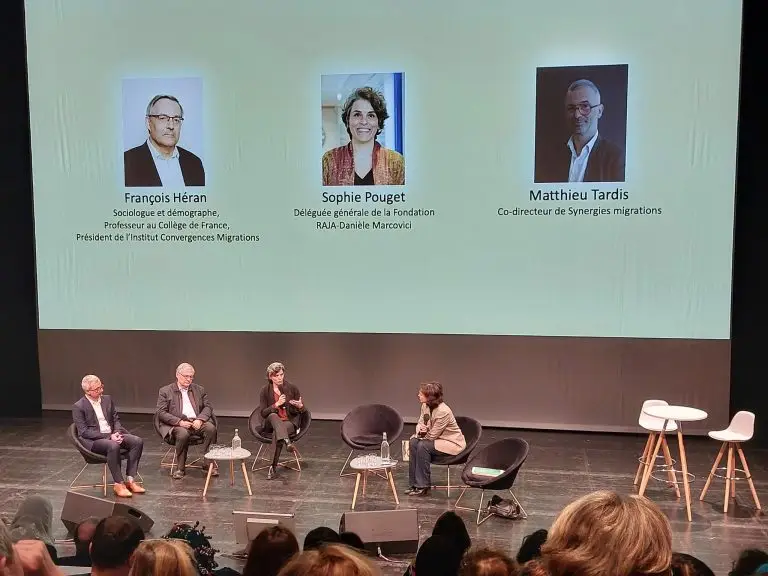
Speakers such as Ghada Hatem, chief physician at the Maison des Femmes de Saint-Denis, and Hélève Bonvalot, director general of the Centre Primo Levi, emphasized the importance of tailored psychological support. Their testimonies highlighted the harsh conditions of reception, the dangers of the migration journey, and the multiple forms of violence experienced before, during, and after migration.
Regarding Afghan women, Parasto Hakim, an Afghan activist, shared a poignant account of her work providing clandestine education for girls. Solène Chalvon-Fiori, senior reporter and filmmaker, criticized the inaction regarding the needs of women and girls in Afghanistan. Neda Noraie-kia, Europe Head of Migration Policy at the Heinrich Böll Foundation, and Olivier Jacques, Regional Director at the Canadian Embassy in France, discussed the challenges related to integration and language learning for migrants. Olivier Jacques also highlighted a Canadian initiative providing financial support to first-time arrivals to facilitate access to education and childcare—a measure particularly beneficial for women.
Women who have experienced migration, such as Aïda Ghadar, Bernadette Rwegera, and Shayda Hessami, actively denounced practices such as forced marriage and the exclusion of women from peace negotiations in conflict-affected countries. Their engagement underscores their resilience, intelligence, and determination to move forward—not only for themselves but also for other women in exile or those remaining in their countries of origin.
Finally, the conference emphasized the critical role of public authorities in supporting migrant women, complementing initiatives led by civil society.